
WEFTEC 2026 in New Orleans centered on innovation, partnerships, and collective action with a focus on the circular water economy and the next generation of water professionals. The opening keynote added a twist as innovation strategist Diana Kander encouraged attendees to question assumptions and patterns in a field built on deep technical expertise.
As AI integrates into our workflows, she argued that curiosity and creativity will be critical to new innovations. And that’s what WEFTEC is all about. It's a place where people swap ideas, share successes and lessons learned, and get an up-close look at new technology.
Sharing Our Experience
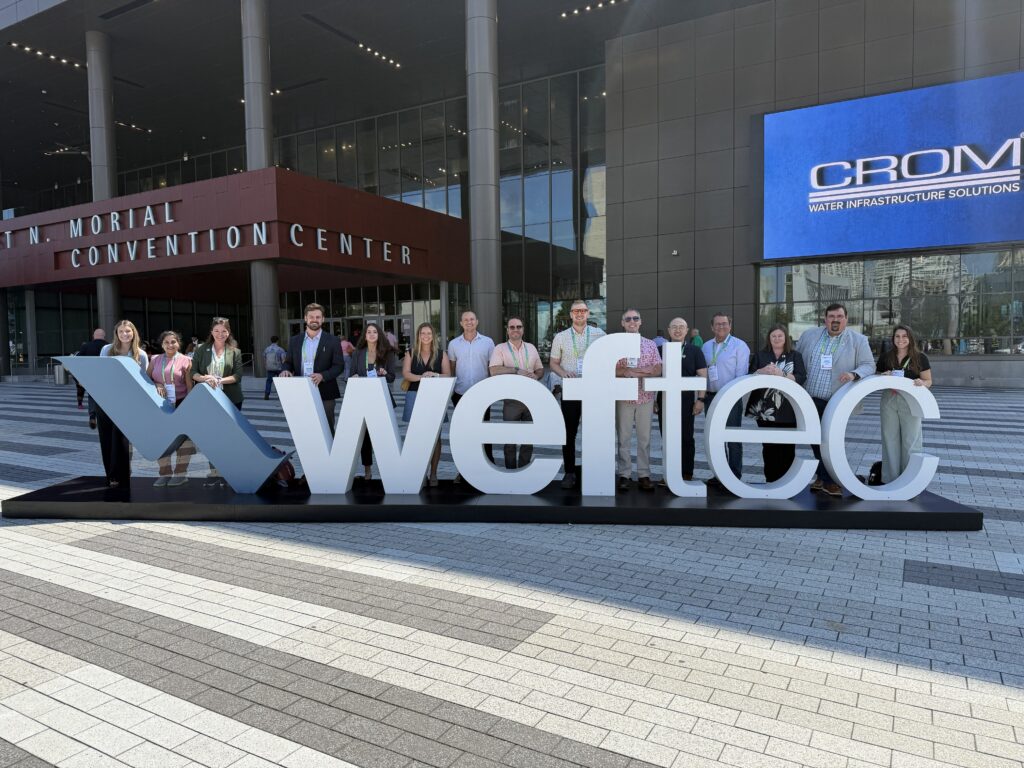
Kennedy Jenks (KJ) sent 17 engineers, researchers, and staff to New Orleans to be part of that exchange, and four of our colleagues took the podium:
Charlie Liu presented "Separation and Destruction of Per- and Polyfluoroalkyl Substances (PFAS) from Potable Reuse Reverse Osmosis Concentrate," tackling what happens to PFAS once reverse osmosis concentrates them.
Mike Joyce presented "Sand Island WWTP UV Disinfection Upgrade Results in Significant Savings," sharing how a major disinfection upgrade is paying off.
Bhargavi "Gavi" Subramanian presented "Reinventing Wastewater Treatment Plants for Energy-Neutral Treatment and Enhanced Fertilizer Production," on cutting energy needs and recovering nutrients that can become fertilizer.
Kevin Clack presented "Process Modeling, Performance Evaluation, and Nutrient Removal Mechanisms of a Combined Aerobic Membrane Bacterial-Algal Reactor," drawing on his doctoral research into treatment approaches to reduce aeration demand while maintaining reliable performance.
Together, these talks showed why WEFTEC is such an important event. People don’t just highlight solutions. They are sharing research, project results, and lessons learned so the industry can decide what to try next.
Building Connections
From conference sessions to conversations on the exhibit floor, a few themes kept coming up. PFAS treatment and destruction remained front and center, and uncertainty around federal PFAS regulations for biosolids continued to shape discussions across the industry. Attendees also discussed the intensification and optimization of liquid and solid treatment, nutrient management, artificial intelligence, and alternative project delivery approaches.
The common thread was system complexity. Utilities are simultaneously weighing treatment, regulatory, workforce, technology, and delivery decisions, which makes it especially valuable to compare notes with other organizations.
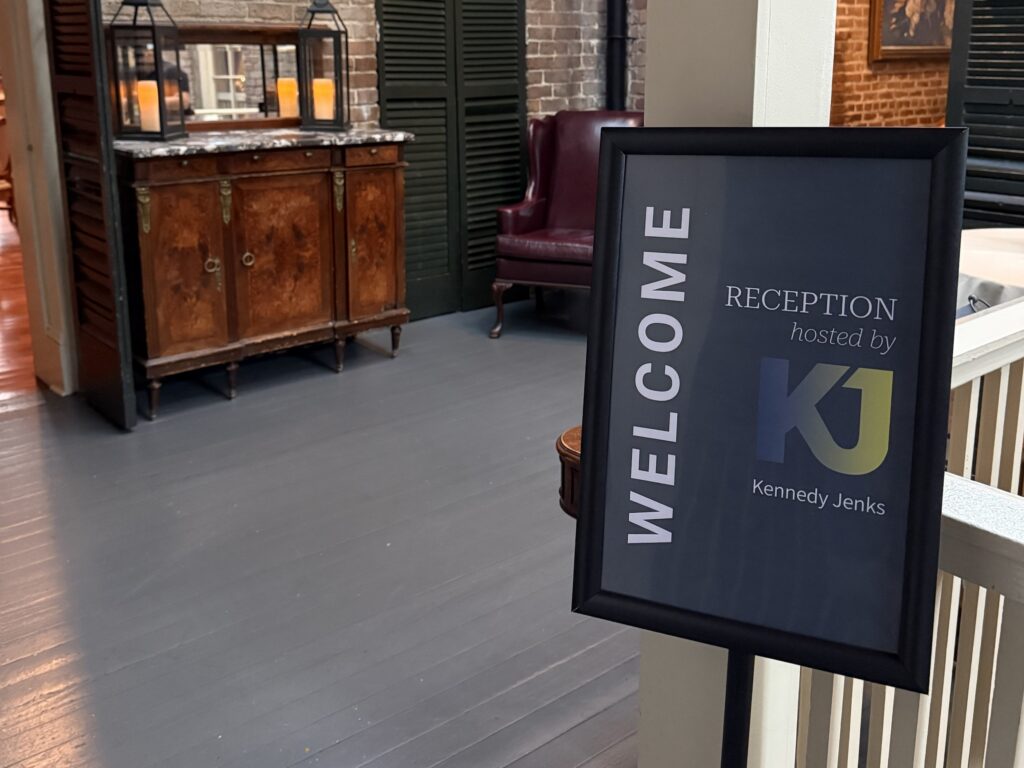
The conversation didn't stop when the sessions ended. We hosted more than 100 clients and colleagues at our NOLA-themed reception at Muriel's Jackson Square. It was a more casual setting to process what we'd heard and dig into how new ideas and technologies might apply to the specific needs of utilities and communities.
Continuing the Conversation
Like nearly everything else, AI is embedding itself in water, and it was a big topic this year. But the core challenges haven't changed. The industry is still grappling with aging infrastructure, evolving regulations, and the challenges of recruiting people who design and run our essential systems.
New tools can help, but they don't replace curiosity, sharing experiences, or having a good conversation with someone who's solved a similar problem. The real value of WEFTEC is keeping the conversations going with our clients and partners.
About Kennedy Jenks
Kennedy Jenks is a leading water and environmental engineering and environmental sciences firm that serves public agencies and private-sector clients with ~500 employees nationwide. The employee-owned firm delivers innovative design, construction, and technology solutions for water and environmental projects across the United States.
Media Contact
For more information about Kennedy Jenks, please contact Media@KennedyJenks.com.
The information on this page was accurate at the time of publication.
